1. General
These General Terms and Conditions (hereinafter the "GTC") govern the legal relationship (hereinafter the "Agreement") between you (hereinafter the "User") and Global Neuro Foundation, Clavadelerstrasse 1, 7270 Davos, Switzerland (hereinafter "GN", together the "Parties") concerning the website www.globalneuro.org, (hereinafter the Site) and events and webinars of GN (herinafter the "Events").
By using the Site and its services, or upon clicking of the acceptance icon indicated on the Site the User confirms to have read these GTC and agrees to be bound by these GTC.
These GTC are available on the Site.
2. No advice
The Site and Events are not developed for laypersons. The products, procedures, therapies etc. described on the Site or at Events are only to be applied in environments specially designed and by medical professionals specially certified and trained for such procedures.
The information provided on the Site and at the events is for educational and research purposes only and does not give professional advice or recommend particular products, procedures or therapies etc. The information contained in the Site is not intended to present the only or necessarily the best products, procedures, or therapies etc.
No suggested test or procedure should be carried out unless, in the User's professional judgment, its risk is justified. Whoever applies products, procedures and therapies etc. shown or described on the Site will do so at her/his own risk and is responsible for their compliance with all local laws, regulations, and medical practice applicable. Because of rapid advances in the medical sciences, GN recommends that independent verification of diagnosis, therapies, drugs, dosages, and operation methods should be made before any action is taken.
All information contained in the Site and provided during the Events is only intended for preparing medical procedures and not as an aid whilst carrying out medical procedures.
Individuals with any type of medical condition are specifically cautioned to seek professional medical advice before beginning any sort of health treatment. For medical concerns, including decisions about medications and other treatments, users of the Site should always consult their physician or other qualified healthcare professional.
3. License to services
Subject to your compliance with these Terms, we can grant you a nonexclusive and nontransferable license upon and limited to necessity to download and install one (1) copy of an Application to your mobile device, and to access and use the Services, solely for your own personal use. You may not: (i) copy, modify or distribute the Application for any purpose; (ii) transfer, sublicense, lease, lend, rent or otherwise distribute the Application or the Services to any third party; (iii) decompile, reverse-engineer, disassemble, or create derivative works of the Application or the Services; (iv) make the functionality of the Application or the Services available to multiple users through any means; or (v) use the Services in any unlawful manner, for any unlawful purpose, or in any manner inconsistent with these Terms.
4. Third-Party Materials and agreements
You may be able to access, review, display or use third-party services, resources, content or information (“Third-Party Materials”). You acknowledge sole responsibility for and assume all risk arising from your access to, use of, or reliance upon any such Third-Party Materials, and the GN disclaims any liability that you may incur arising from your access to, use of or reliance upon such Third-Party Materials or user content. You acknowledge and agree that GN: (a) is not responsible for the availability or accuracy of such Third-Party Materials or the products or services on or available from such Third-Party Materials; (b) has no liability to you or any third party for any harm, injuries or losses suffered as a result of your access to or use of such Third-Party Materials; and (c) does not make any promises to remove Third-Party Materials from being accessed through the Services. Your ability to access or link to Third-Party Materials or third-party services does not imply any endorsement by the GN of Third-Party Materials or any such third-party services. These Terms of Use do not authorize you to, and you may not, reproduce, distribute, publicly display, publicly perform, communicate to the public, make available, create derivative works of or otherwise use or exploit any Third-Party Materials except as expressly permitted by GN, and the owners of such Third-Party Materials may have the right to seek damages against you for any unauthorized use of their Third-Party Materials.
5. No warranty
The Site and the Services connected therewith are provided on an “as is,” “with all faults,” and “as available” basis and the entire risk as to satisfactory quality, performance, accuracy and efforts is with the User. GN does not make any representations or warranties, express of implied, under the Agreement. Any and all representations and warranties of GN under or in connection with the Agreement are excluded to the extent legally possible, including but not limited to representations of warranties:
- Of merchantability, fitness for a particular purpose, workmanlike effort, error-free access to the site or use thereof;
- Regarding any data and/or information provided or made available by GN or a User on the site or on any external websites linked to the site including but not limited to information being of satisfactory quality, adequacy, accuracy, timeliness, completeness, compliance with local laws as well as the regulations and medical practice thereof; and
- Of uninterrupted or error-free access or use of the site.
The Site does not, and in no way constitute or imply the endorsement, recommendation, or appropriate of an advice. GN does not screen nor in any other way examine the information uploaded by its users on the Site but simply provides the platform.
Any graphic or pictorial materials appearing on the site are digitized reproductions which, though viewable, are not of diagnostic quality and are not designed nor intended to become a permanent part of any patient’s medical record. The User represents and warrants that (i) the User has all necessary power and authorization to accept the GTC; (ii) these GTC are legal, valid, binding and enforceable against the user; (iii) the User’s acceptance of these GTC will not violate any law, rule, regulation or order, or any agreement, binding the User; (iv) and the User will observe all applicable laws and provisions of these GTC.
6. No liability
TO THE FULL EXTENT PERMISSIBLE BY LAW, GN DISCLAIMS ANY AND ALL RESPONSIBILITY FOR ANY DAMAGES OR LOSSES (INCLUDING, WITHOUT LIMITATION, PERSONAL INJURY, FINANCIAL LOSS, DAMAGES FOR LOSS IN BUSINESS PROJECTS, LOSS OF PROFITS OR OTHER CONSEQUENTIAL LOSSES) ARISING IN CONTRACT, TOR OR OTHERWISE FROM THE USE OF OR INABILITY TO USE THE SITE OR PARTICIPATING IN EVENTS OR ANY MATERIAL APPEARING ON THE SITE OR PROVIDED DURING EVENTS, OR FROM ANY ACTION OR DECISION TAKEN AS A RESULT OF USING THE SITE OR PARTICIPATING IN EVENTS OR ANY SUCH MATERIAL OR ANY OTHER ACT OR OMISSION IN CONNECTION WITH THE SITE OR EVENTS.
7. Fees
The usage of the Site by GN and the services of GN under the Agreement connected therewith by GN are free of charge, unless otherwise indicated on the Site.
GN reserves the right to charge for the usage of parts of the Site and the services under the Agreement at any time subject to a respective modification of the agreement according to Article 14 below.
8. Payment rules
For international payments, the recipient and the payer each bear the costs charged by their own bank (fee regulation SHA).
The recipient of the payment accepts that the payer is not able to control the correct processing of the payment instructions.
The recipient of the payment further accepts that the payer is not obliged to bear any costs charged by the bank of the recipient, even if these costs might reduce the amount of the payment credited to the account of the recipient.
9. Intellectual property rights
Unless otherwise stated in this Agreement, any and all intellectual property rights (including, but not limited to copyrights) in all data, information and material uploaded by the User (hereinafter the "User Material") is—subject to Article 10 below—owned by User.
Prints or download extracts from the data, information or material of the Site (hereinafter the "GN Material") as well as any other reproduction thereof are permitted for educational and research purposes or personal use only. None of the GN Material may be used for any commercial purpose by the User. Particularly, the User may not license, sublicense, sell, resell, transfer, assign, distribute, or otherwise exploit or make available to any third party the GN Material in any way.
No GN Material may be reproduced, stored in or transmitted on any other websites (including intranet sites) by the User nor is the User permitted to create any derivative works based on GN Material without written permission of GN.
Some names, instruments, treatments, logos, designs etc. referred to on the Site or at Events are protected by patents, trademarks, or other intellectual property rights even though specific reference to this fact is not made. Therefore, the appearance of a name, instrument etc. without designation as proprietary is not to be construed as a representation by GN that it is in the public domain.
10. User data license
In the course of visiting the Site, the User may upload User Material. As between the Parties, the User shall remain the sole owner of all User Material, provided however that the User hereby grants to GN a worldwide, eternal, unlimited, non-revocable, and non-redeemable license to use, copy, distribute, display, disclose, and perform such User Material or parts of the User Material, to create derivative works thereof, and to sublicense such rights for any and all purposes. User shall have sole responsibility for the accuracy, quality, integrity, legality, reliability, appropriateness, and intellectual property ownership or right to use all User Material, and GN shall not be responsible or liable for the deletion, accuracy, correction, disclosure, destruction, damage, loss or failure to store any User Material. For the avoidance of any doubt, the license granted by the User to GN shall remain valid even if this Agreement is terminated for whatever reason.
Any User Material shall be depersonalized by the User before submitted to GN (ie, the User must ensure that User Material does not qualify as personal data in the sense of Art. 3 let. a of the Swiss Act on Data Protection when submitted to GN). The User acknowledges that he/she has the sole responsibility that any and all User Material is fully depersonalized.
The User Material has to comply with all relevant laws and regulations as well as ethical and medical standards and may not (i) have an illegal, harmful, or harassing content or invade another's privacy, (ii) infringe rights of a third party, including any intellectual property rights, or (iii) contain viruses or any other computer codes, files or programs designed to interrupt, destroy, or limit the functionality of any computer software or hardware or telecommunications equipment.
If GN exploits the User Material, it will name the respective User to the extent reasonably possible. GN is, however, not obliged to pay to the User a royalty or other financial compensation for such exploitation.
11. Data Protection
GN shall comply with all applicable legal provisions regarding data protection. In particular, GN shall not provide or otherwise disclose any personal data of the User to any third party without authorization. Details on the use of the Users' personal data by GN are set forth in the Data Protection Policy of GN which is accessible on the website of GN.
12. Advertising material
Advertisers, if any, are responsible for ensuring that the User Material submitted for inclusion on the Site complies with all relevant laws and regulations as well as ethical and medical standards. GN will not take responsibility for any error, omission or inaccuracy in advertising material. Appearance on the Site does not constitute a guarantee or endorsement of the quality or value of a product or of the allegations made by the manufacturers.
13. Infringement and indemnification
If the User does not comply with these GTC, GN has the right to prevent the User from visiting the Site and using the services connected therewith, as well as from participating in the Events and GN reserves the right to any legal action GN thinks is appropriate.
If, based on a written agreement between the User and GN, the User is entitled to provide access to the Site to third persons, the User represents that all such third persons using the Site are contractually bound by these terms, conditions and disclaimers as well.
The User agrees to indemnify, defend and hold harmless GN, to the fullest extent permitted by law, against any cause of action, all liabilities, losses, costs or expenses (including reasonable fees and expenses of legal counsel) with respect to any claim by third parties arising out of the User's failure to perform its obligations under the agreement.
14. No right to visit the Site and modification of the Site
Unless expressly stated in this or another written agreement between the Parties, GN has no legal duty to the User, and may at any time and without giving grounds prevent the User from visiting the Site and using the services connected therewith.
GN is entitled without prior notice to the User in its free discretion
- to shut down the Site temporarily or permanently at any time;
- to remove any and all content on the Site;
- to modify the Site and the services connected therewith.
15. Termination of the Agreement
Each Party may terminate this Agreement with immediate effect by email at any time.
Upon termination of the Agreement, the User shall not have access to the Site or the right to participate in Events anymore without restriction. The user data license according to Article 9 above shall under no circumstances be terminated due to the termination of this agreement.
16. Force majeure
No Party shall be liable to the other if performance of any of its obligations hereunder is prevented, hindered, or delayed by the occurrence of circumstances beyond its control, which circumstances shall include, but shall not be limited to, any act of God, act of any government or other statutory undertaking, industrial dispute beyond the area of control of such Party, fire, explosion, accident and power failure, always provided (i) they constitute a force majeure event (ie, are beyond the control of the Party invoking it), and (ii) they are not the result of the failure of such Party to perform any of its obligations under the Agreement.
Following the occurrence of any such event the Party thereby affected shall notify the other Party in due time of such occurrence and such Party shall use its reasonable endeavors to overcome or to minimize the adverse effects thereof.
Performance of the affected and related obligations shall be postponed for a period equal to the time lost by reason of the delay. If as a result of force majeure, a Party is rendered definitely unable to perform, or if the period of force majeure has lasted longer than three months or as soon as it is reasonably clear that it will last longer than three months, the other Party may, with immediate effect, terminate the agreement in writing.
18. Registration for GN Events
Registration for an Event can be made on the website using the registration form. Upon submission and receipt of the completed registration form and payment (apart from the education offered by GN without fee), the participant will receive a confirmation through which the registration becomes legally binding.
19. Cancellation Policy
50% of the registration fee will be refunded until 30 days before the Event starts. No refund thereafter.
20. Evaluation criteria and selection for GN Events
If no other evaluation criteria are expressly defined and stated, selection is done in general in observance of the principle first come, first serve. This means that the applicants are considered according to the sequence of their registration and payments arrived at GN.
No correspondence concerning the evaluation criteria and the selection will be hold and legal action is ruled out.
21. Recording at GN events
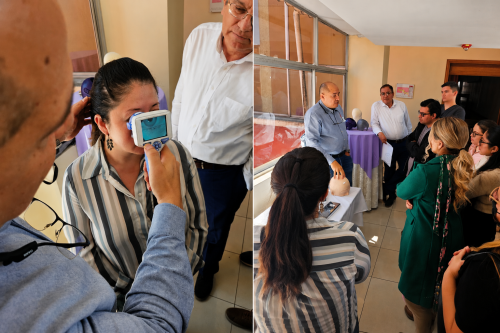
GN reserves the right to film, photograph and audio record during its Events. Participants must understand that in this context they may appear in these recorded materials. GN assumes participants agree that these recorded materials may be used for the GN’s marketing and other purposes, and that they may be made available to the public.
22. Use of BrainBox at GN Events
Participation in GN Events partly includes the use of a so called "BrainBox". The BrainBox is provided by UpSurgeOn S.r.l. for the participants' temporary use during the Event. The fee for the BrainBox is included in the Event fees. The BrainBox qualifies as Third-Party Material according to Article 4. The respective General Terms and Conditions of UpSurgeOn S.r.l., available on their website, apply to the use of the BrainBox.
23. Warranty and Liability at GN Events
GN endeavors to provide the best possible content and organization of Events. GN reserves the right to replace announced speakers and to make changes to the programme at short notice, provided that this does not affect the basic orientation of the Event. No claims against GN can be derived from this. It is the responsibility of the participant to ensure that he or she has accident or liability insurance. GN accepts no liability of any kind. Articles 5 and 6 above remain applicable.
24. Miscellaneous
The User shall not assign any rights and obligations under this Agreement without GN's prior written consent.
The agreement constitutes the entire agreement between the Parties with respect to the subject matter of the agreement.
Failure or neglect by GN to enforce any of the provisions of this Agreement shall not be construed or deemed to be a waiver of GN 's rights nor shall this affect the validity of the whole or any part of this agreement, nor prejudice GN's rights to take subsequent action.
The Parties are and remain independent parties. It is not the Parties’ intent to create and this agreement does not create the formation of a partnership, joint venture or similar relationship between the Parties.
Should any provision of this agreement be invalid or unenforceable, the remaining provisions shall be valid. In the place of an invalid provision, a valid provision is presumed to be agreed upon by the Parties, which comes economically closest to the one actually agreed upon.
This Agreement is solely governed by substantive Swiss law, regardless of where the person visiting the Site or participating at an Event resides or where this person made his submission, posting, transaction or connection with the Site.
For all disputes arising out of this Agreement or in connection with this Agreement the ordinary courts at the domicile of GN shall be responsible.
25. Modification of the General Terms and Conditions
GN reserves the right to modify the GTC at any time, without giving reasons. If the User does not object to the applicability of the revised Agreement within 20 days after receipt of said notice, the modified agreement shall be deemed to be accepted by the User. If the User does not agree to any change in the GTC, the Agreement shall be terminated automatically.
26. Google Analytics
The provider of Google Analytics is Google LLC, a subsidiary company of the holding company Alphabet Inc, based in the USA. Before the data is transmitted to the provider, the IP address is shortened by activating IP anonymization ("anonymizeIP") on this website within the Member States of the European Union or in other contracting states to the Agreement on the European Economic Area. The anonymized IP address transmitted by your browser as part of Google Analytics will not be merged with any other data held by Google. Only in exceptional cases will the full IP address be transmitted to a Google server in the USA and shortened there. In these cases, we ensure that Google Inc. maintains a sufficient level of data protection through contractual guarantees. According to Google Inc., in no case will the IP address be associated with other data relating to the user.
For more information about the web analytics service used, please visit the Google Analytics website. Instructions on how to prevent the processing of your data by the web analytics service can be found at http://tools.google.com/dlpage/gaoptout?hl=eng. If you click here (disable Google Analytics), the opt-out cookie will be set.